
Behind the Scenes: What Really Happens During a Professional Lighting Install
Ever wonder what actually happens when you hire professionals to transform your home into a holiday wonderland? Most homeowners see the magical end result but have no idea about the detailed process that makes it all possible. Let's pull back the curtain and show you exactly what goes into a professional Christmas lighting installation.
The Planning Phase: More Than Just Pretty Lights
Before we even touch a single bulb, the real work begins with a comprehensive site assessment. Our team visits your property during daylight hours to evaluate your home's architecture, existing electrical setup, and landscape features. We're looking at rooflines, measuring distances, identifying potential challenges, and mapping out the most effective lighting design.
This isn't a quick walk-around either. We take detailed measurements, photograph key areas, and note important details like the height of your gutters, the spacing of your windows, and the types of trees and shrubs in your yard. Every home is different, and what works beautifully on your neighbor's colonial might not be the best approach for your contemporary design.

During this phase, we also discuss your vision and preferences. Do you want classic warm white lights or are you open to multicolor displays? Should we focus on outlining your home's architecture or create a more elaborate scene with animated elements? These conversations help us create a custom lighting plan that matches your style and budget.
Safety First: The Foundation of Professional Installation
Here's something DIY enthusiasts often overlook – professional Christmas lighting installation starts with serious safety protocols. Before we bring out the first ladder, our team conducts a thorough safety briefing and equipment check.
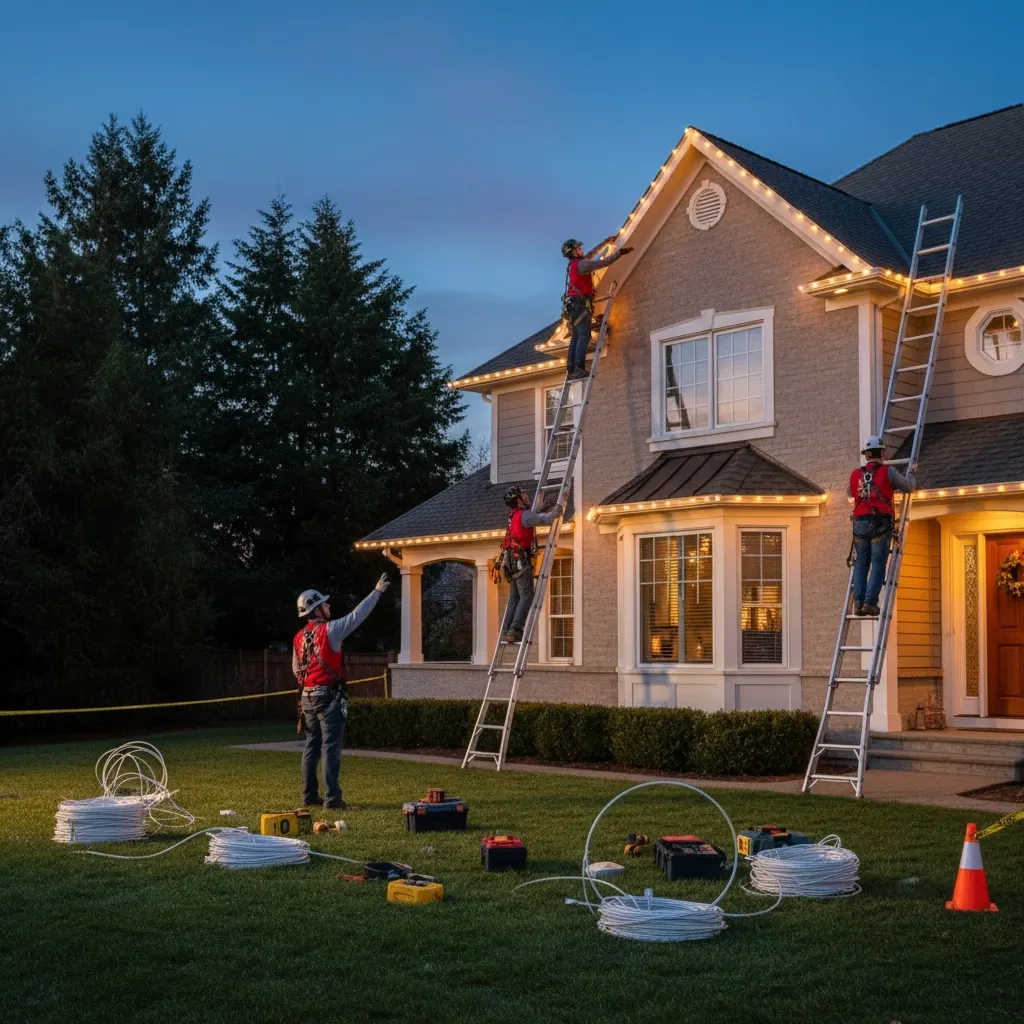
We arrive with commercial-grade ladders, safety harnesses, and proper footwear designed for working at heights. Our installers are trained in ladder safety, proper climbing techniques, and how to work safely around electrical systems. We also check weather conditions – if it's windy, icy, or stormy, we'll reschedule rather than risk anyone's safety.
The electrical safety component is equally critical. We always turn off power at the circuit breaker before making any connections and use voltage testers to confirm circuits are dead. Every connection point is inspected, and we never assume existing outlets are properly grounded or weatherproofed.
The Installation Day: Organized Chaos
When installation day arrives, it might look like controlled chaos, but there's actually a carefully orchestrated process happening. Our crew arrives with trucks full of equipment: lights, extension cords, timers, clips, stakes, and all the specialized tools needed for the job.
The first step is staging – we organize materials by zones so installers can work efficiently without constantly walking back to the truck. Lights are tested before installation (nobody wants to string up an entire roofline only to discover a section doesn't work), and we sort everything by the order it will be installed.

Roofline Installation: The Trickiest Part
Starting with the roofline is usually the most challenging part of any installation. This is where you'll see the biggest difference between professional and DIY approaches. We use specialized clips designed specifically for different types of gutters and roof edges – no nails, screws, or staples that could damage your home.
Each light is individually positioned and secured, ensuring consistent spacing and proper alignment. For multi-story homes, this often requires extension ladders and sometimes even scaffolding for complex rooflines. Our installers work in teams, with one person on the ladder and another spotting from below, maintaining communication throughout the process.
The real skill shows in how we navigate obstacles like downspouts, architectural details, and transitions between different roof levels. Professional installers know how to maintain clean lines while working around these challenges, creating seamless lighting displays that highlight your home's best features.
Window and Architectural Detail Work
Once the main rooflines are complete, we move to windows, doors, and other architectural features. This is where the artistic element really comes into play. We're not just hanging lights – we're framing your home's character and creating visual depth.
Window installations require precision to ensure lights are evenly spaced and properly aligned. We use specific clips and techniques to ensure lights lay flat against window frames without gaps or sagging sections. For larger windows, this might involve multiple connection points to maintain the desired look.
Doorways and entrances get special attention since they're focal points. We often coordinate lighting with wreaths, garland, and other decorations to create cohesive, welcoming displays that make great first impressions.
Landscape and Tree Installation
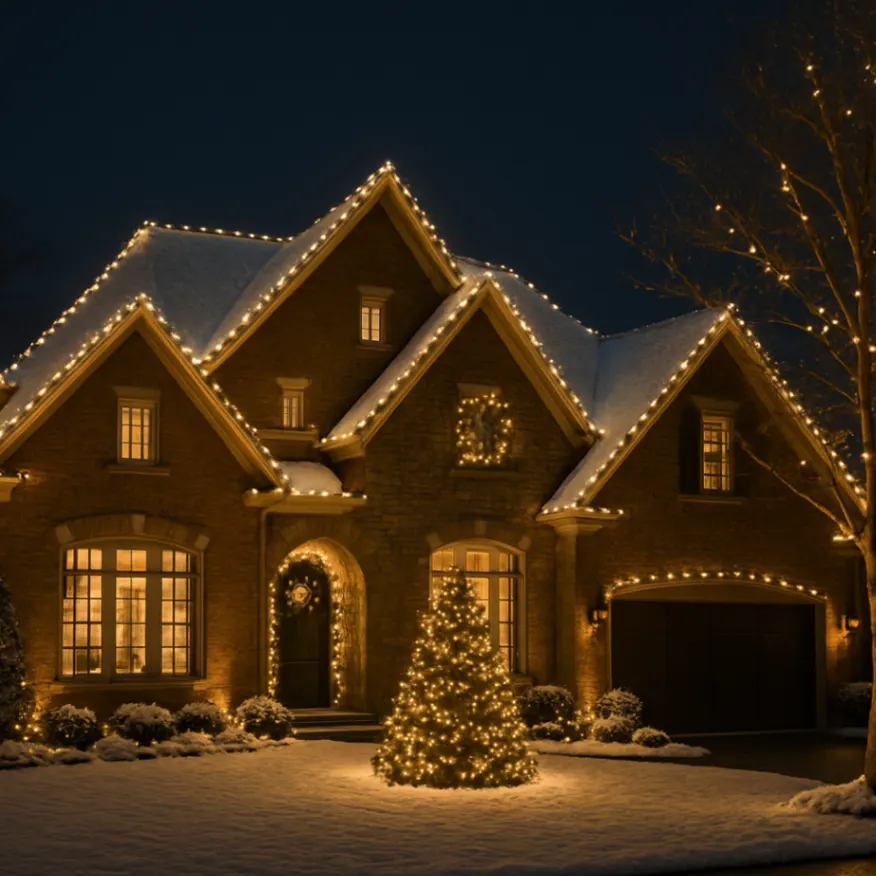
Moving to the landscape elements brings its own set of challenges and techniques. Tree wrapping is both an art and a science – we start from the bottom and work our way up, maintaining consistent spacing while following the natural shape of the branches.
Different trees require different approaches. Evergreens with dense foliage need closer light spacing to create good coverage, while deciduous trees (if they still have leaves) might need wider spacing to avoid an overly dense appearance. We also consider how the tree will look throughout the season as leaves fall or branches shift.
For bushes and shrubs, we use net lights or carefully wrapped mini lights, depending on the size and shape of the plants. Ground-level installations require special attention to weatherproofing since these lights are more exposed to moisture and foot traffic.
Electrical Connections and Power Management
Here's where professional experience really matters. We don't just plug everything into the nearest outlet and hope for the best. Our installers calculate power loads, distribute circuits properly, and ensure all connections are weatherproofed and secure.
Most homes require multiple circuits to handle the electrical load of a full lighting display. We use professional-grade extension cords rated for outdoor use and employ techniques like load balancing to prevent tripped breakers. Every connection point gets weatherproof covers, and we secure all cords to prevent tripping hazards or damage from wind and weather.
Timer installation is typically the final electrical step. We program everything according to your preferences and test the entire system multiple times to ensure reliable operation throughout the season.
Quality Control and Final Testing
Before we pack up and leave, there's an extensive quality control process. We walk through the entire installation, checking every section for proper alignment, secure connections, and consistent spacing. Any lights that aren't working properly get replaced immediately.
The final step is a complete system test with the homeowner present. We demonstrate how the timers work, show you where all the connections are, and provide basic troubleshooting information. We also schedule any necessary adjustments – sometimes things look different at night than they did during installation.
The Hidden Details That Make the Difference
What you don't see are all the small details that distinguish professional installations. We use color-matched clips that blend with your home's trim. Extension cords are routed along natural lines and secured to prevent wind damage. Every connection is made with weatherproof techniques that will last the entire season.
We also plan for maintenance throughout the season. Our installation techniques make it easy to replace individual bulbs or repair sections if needed, and we keep detailed records of what lights and materials were used at each property.
Clean-Up and Documentation
Professional installation doesn't end when the lights are working. We clean up all packaging, old bulbs, and installation debris. Your property should look better than when we arrived, with beautiful lighting and no mess left behind.
We also provide documentation including timer settings, electrical load information, and maintenance recommendations. This helps both homeowners and our service team if any issues arise during the season.
The reality is that professional Christmas lighting installation involves far more complexity, safety considerations, and attention to detail than most people realize. What looks like simple light installation actually requires technical knowledge, safety training, specialized equipment, and years of experience to do properly. That's why more families are choosing professional installation – because the results speak for themselves, and the peace of mind is priceless.
Want it done for you?
Free on-site walk-through, fixed price, no obligation.