
Commercial-Grade Christmas Lights Vs Store-Bought: The Truth About What Lasts
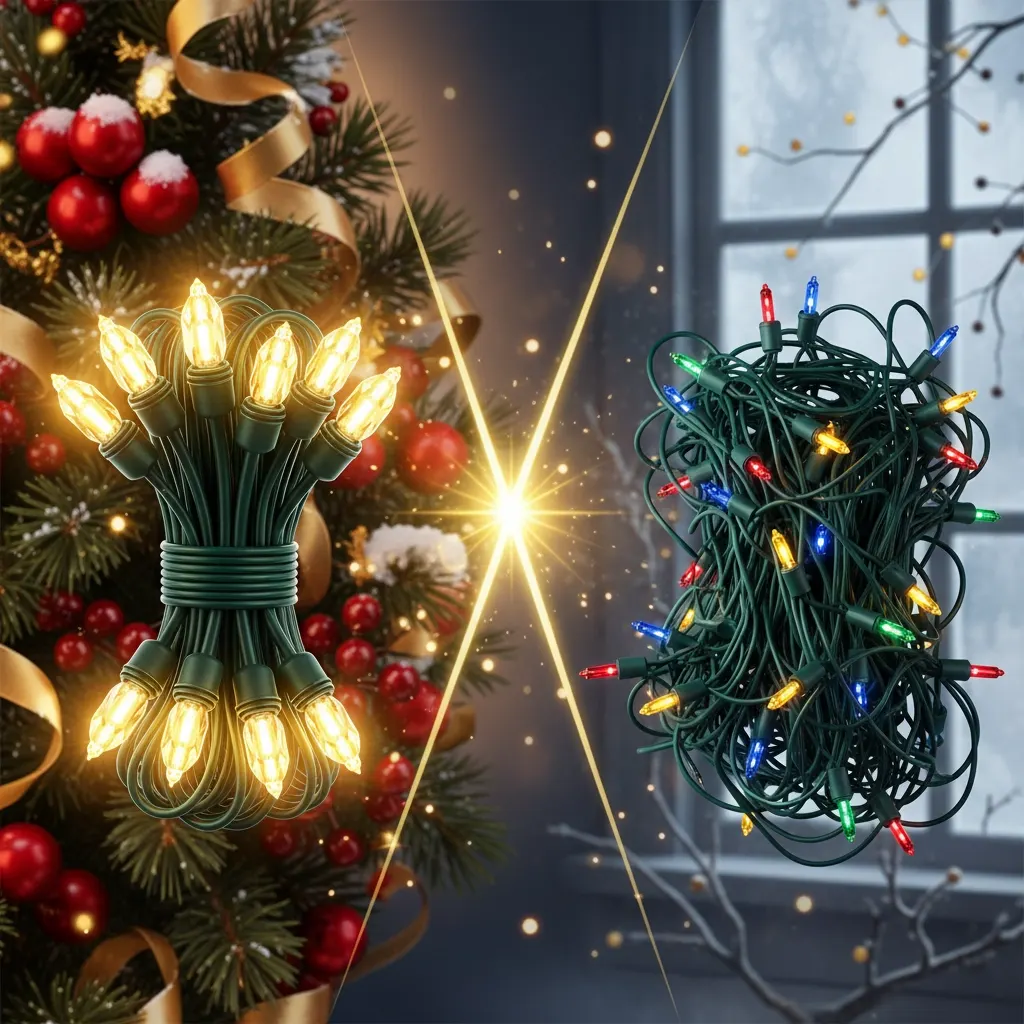
Ho ho ho! Let me tell you something that'll save you more headaches than finding a parking spot at the mall on Christmas Eve – the difference between commercial-grade Christmas lights and those store-bought strings is absolutely massive. And I'm not just talking about price here, folks!
Every year, homeowners across Lake Norman and Lake Wylie ask us the same question: "Why should I pay more for commercial lights when I can grab some at the hardware store?" Well, buckle up, because we're about to unwrap this mystery once and for all.
The Real Story Behind Store-Bought Lights
Let's be honest about what you're getting when you grab those budget-friendly light strings off the shelf. Retail Christmas lights are designed with one goal in mind: getting you in and out of the store with the lowest price tag possible.
These lights typically feature a two-piece bulb and socket design that might seem convenient for replacing individual bulbs, but here's the kicker – that gap between the bulb and socket is like leaving your front door cracked open during a snowstorm. Moisture, water, and debris sneak right in, causing corrosion and electrical failures faster than you can say "Jingle Bells."
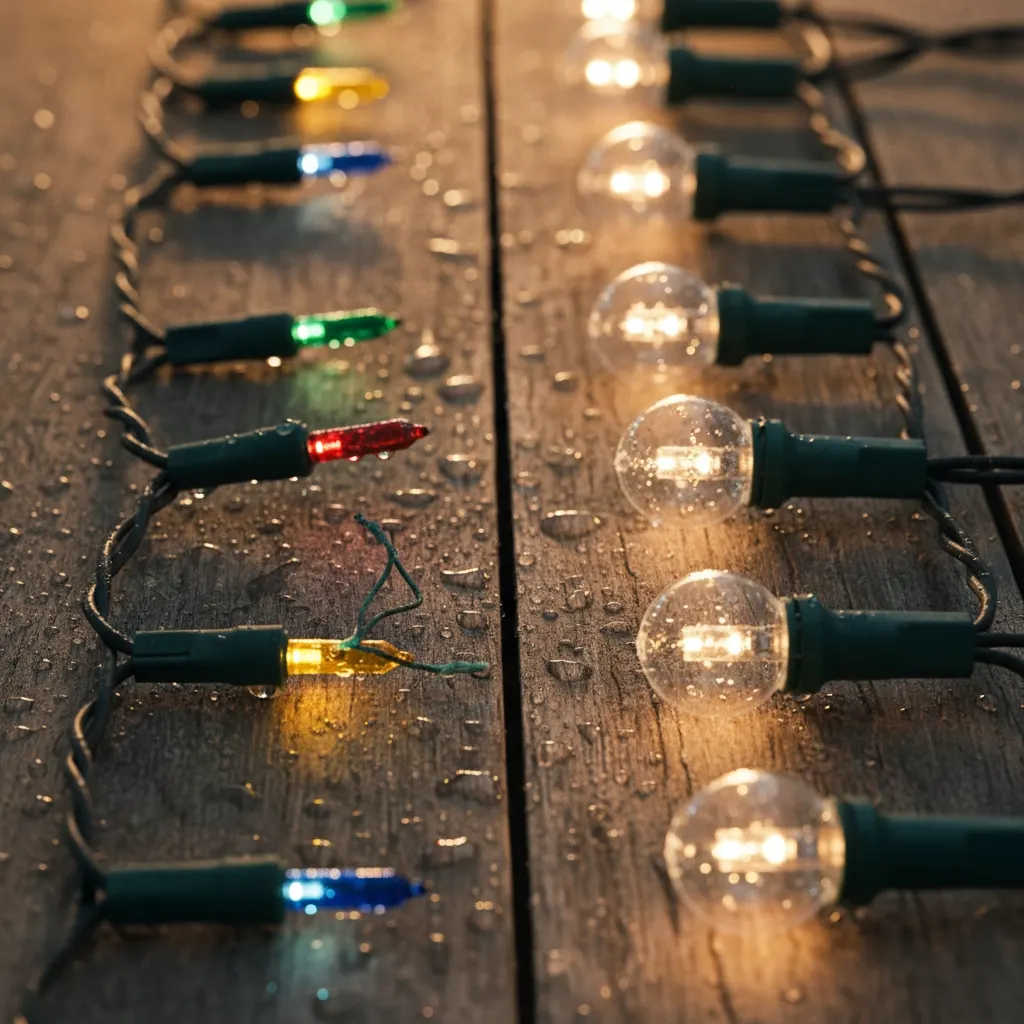
Store-bought lights use what's called half-wave rectified LEDs, which means they cycle on and off only once per second. The result? Your display looks dimmer and less vibrant than it should. It's like trying to light up your home with a flashlight that's running out of batteries.
Most retail incandescent bulbs last around 3,000 hours, and in many cases, an entire strand fails within just one season. The wiring is thin, the colors are inconsistent from box to box, and don't even get me started on trying to match colors if you need to buy more lights mid-season!
The brutal truth? Most store-bought lights last only 2 to 3 seasons before you're back at the store, wallet in hand, buying replacements. Some don't even make it through their first Christmas!
Why Commercial-Grade Lights Are Game-Changers
Now, here's where things get exciting! Commercial-grade Christmas lights are engineered like they're heading to the North Pole for Santa's approval. These aren't your average holiday decorations – they're built for professional installers, municipalities, and anyone who demands their lights work perfectly season after season.
The magic starts with a one-piece bulb socket design that creates a completely sealed connection. No gaps, no openings, no invitation for Mother Nature to wreak havoc on your holiday display. These weatherproof designs handle snow, ice, and everything else winter throws at them without breaking a sweat.
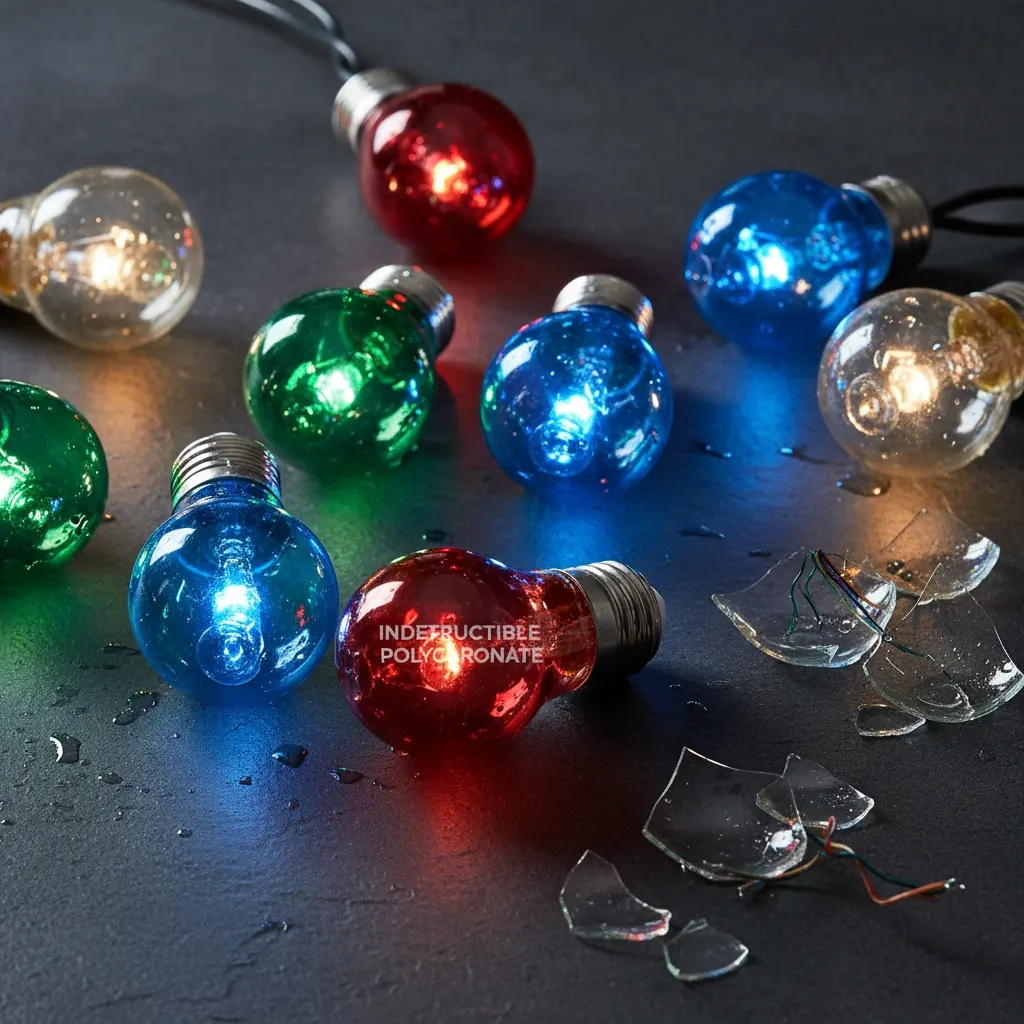
But wait, there's more! (Sorry, couldn't resist.) Commercial bulbs use polycarbonate shells instead of traditional glass, making them virtually shatterproof while still maintaining that classic glass look we all love. We're talking about bulbs that are up to 200 times stronger than traditional glass bulbs. You could probably play hockey with these things! (But please don't – Santa's watching.)
Here's a technical tidbit that'll blow your mind: commercial C9 bulbs contain 5 diodes compared to just 1 diode in residential-grade bulbs. This means significantly brighter, more vibrant displays that actually make your neighbors stop and stare in awe.
The wiring in commercial-grade lights uses SPT 1W rating for weatherproofing and features thicker-gauge construction with UV resistance. Translation? These lights can handle whatever weather throws at them and keep shining bright.
The Brightness Battle: Full-Wave vs Half-Wave
This is where commercial lights really show off. All commercial-grade lights use full-wave rectification, meaning they cycle on and off twice per second instead of once. This makes them visually brighter and more vibrant than their half-wave retail cousins. It's like upgrading from standard definition to 4K – once you see the difference, you can never go back!
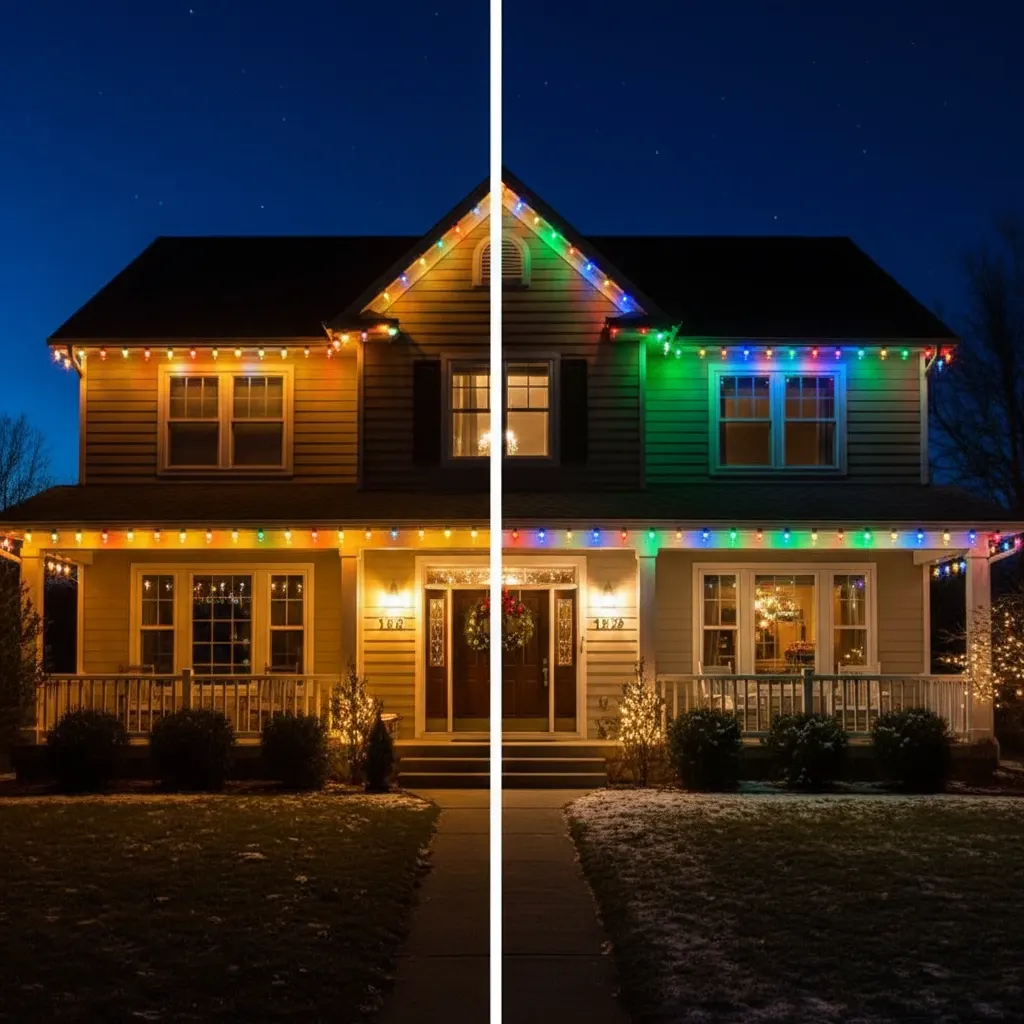
Commercial lights draw 90% less power than incandescent options too. Your electric bill will thank you, and so will the environment. Plus, professional-grade bulbs are rated to last 75,000 hours. Some C9 bulbs can reach 50,000 hours, which theoretically means they could last 50+ years if you run them 15 hours nightly through the holiday season. That's enough Christmas magic to last until your grandkids have grandkids!
The Numbers Don't Lie: A Side-by-Side Comparison
Let's put this in perspective with some cold, hard facts:
Lifespan Showdown:
- Store-bought: 2-3 seasons (if you're lucky)
- Commercial-grade: 6-8 years consistently
Durability Test:
- Store-bought: Thin wiring, glass bulbs, moisture-prone connections
- Commercial-grade: Thick UV-resistant wiring, shatterproof bulbs, sealed weatherproof connections
Performance Power:
- Store-bought: Half-wave lighting, 1 diode per bulb, inconsistent colors
- Commercial-grade: Full-wave lighting, 5 diodes per C9 bulb, uniform color matching
Weather Resistance:
- Store-bought: Poor (basically invites moisture in)
- Commercial-grade: Excellent (sealed against everything winter can dish out)
The True Cost of Christmas Magic
Here's where the math gets interesting. Sure, commercial-grade lights cost more upfront, but let's think long-term like Santa planning his annual route. One set of commercial lights lasting 6-8 years can outlast 2-4 sets of retail lights. When you factor in replacement costs, commercial lights actually save you money over time!
Plus, think about the time and frustration you save. No more untangling burnt-out strands on Christmas morning. No more emergency trips to the store because half your display just died. No more explaining to the kids why the house looks half-decorated. Commercial lights give you peace of mind and consistent holiday magic year after year.
Serviceability: The Gift That Keeps on Giving
One of the coolest features of commercial-grade lights? Individual bulbs or wire sections can be easily replaced without tossing the entire strand. With store-bought lights, when one section fails, the whole strand often becomes unusable. It's like having a car where you have to buy a new vehicle every time you get a flat tire!
Commercial lights are designed for maintenance and longevity. This serviceability means your investment keeps paying off year after year, while store-bought lights end up in landfills after just a season or two.
Making the Right Choice for Your Home
For homeowners in the Lake Norman and Lake Wylie area who are serious about their holiday display, commercial-grade lights represent genuine value. The reliability, brightness, and professional appearance make every investment dollar worthwhile.
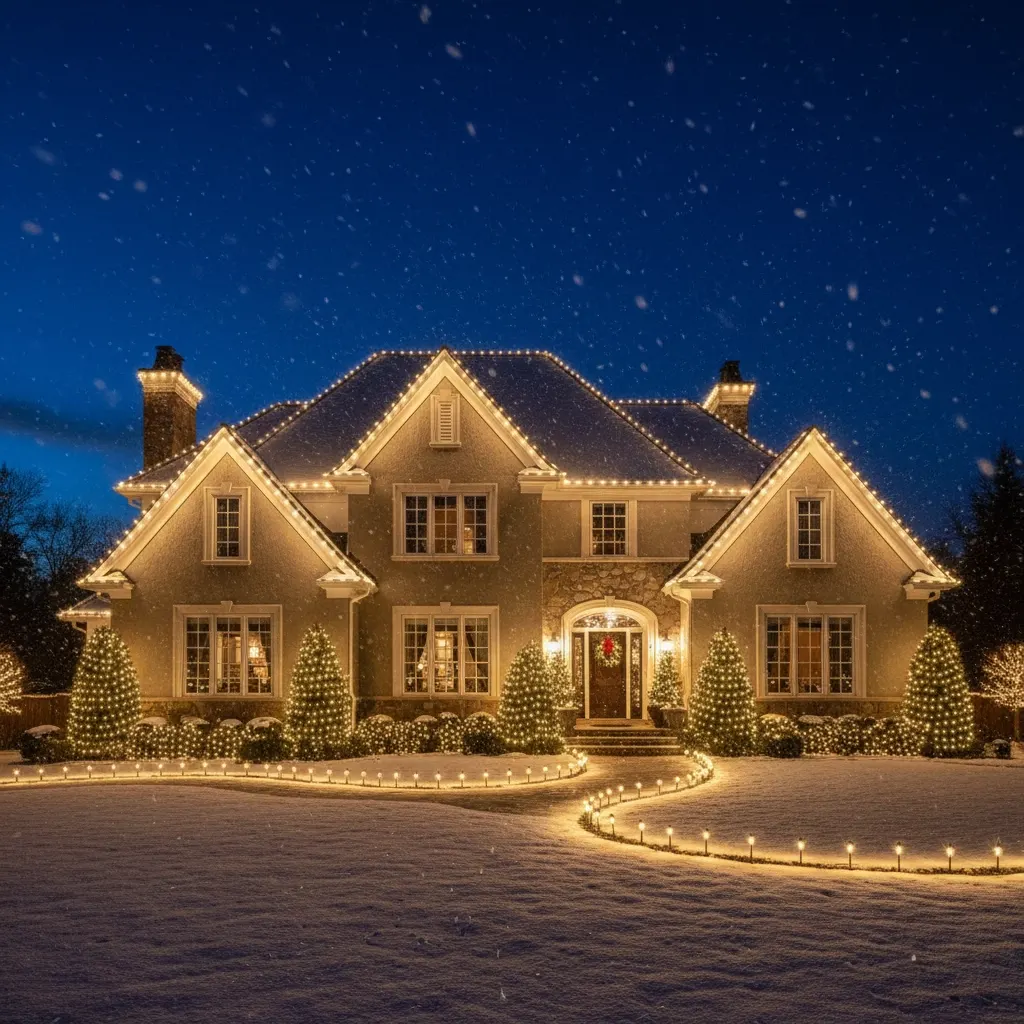
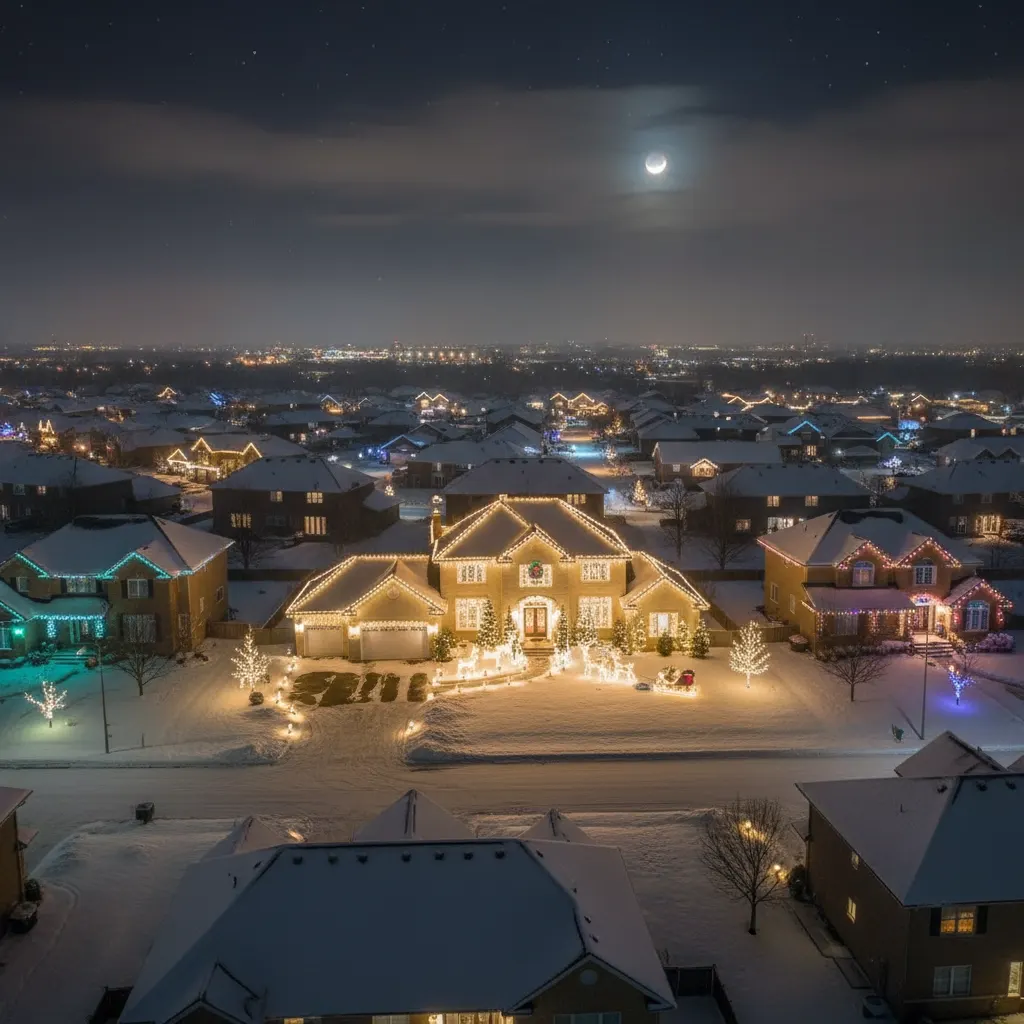
If you're planning a large-scale installation or want your home to be the talk of the neighborhood, commercial-grade lights are absolutely worth it. The difference in quality is immediately visible – your neighbors will wonder how you achieved such a professional look!
Even for casual decorators, when you consider the total cost of ownership over 5-10 years, commercial options quickly prove their value. No more annual shopping trips for replacement lights, no more mid-season failures, and no more settling for dim, inconsistent displays.
The Bottom Line: Quality That Lasts
Commercial-grade Christmas lights aren't just better – they're engineered for people who want their holiday magic to last. They're brighter, more durable, more efficient, and ultimately more cost-effective than their store-bought counterparts.
At Christmas Lighting Done 4 U, we've seen firsthand how the right lights can transform not just your home, but your entire holiday experience. When you choose quality commercial-grade lights professionally installed, you're not just buying decorations – you're investing in years of worry-free holiday joy.
Ready to see the difference for yourself? Your home deserves lights that shine as bright as your holiday spirit, and we're here to make that happen. After all, Christmas only comes once a year – shouldn't it be absolutely magical every single time?
Want it done for you?
Free on-site walk-through, fixed price, no obligation.